2025
CodeRevU — AI-Powered GitHub PR Review
An AI-powered GitHub pull request review platform that automatically generates structured, actionable code reviews using Retrieval-Augmented Generation (RAG) and Gemini AI.
Technology Stack
Next.js 16TypeScriptPostgreSQLPrismaGemini AIPineconeInngestGitHub WebhooksBetter AuthPolar.shTanStack Query
Overview
CodeRevU was built to eliminate repetitive manual pull request reviews by automating high-quality, context-aware feedback directly at the PR level. The system indexes repositories asynchronously, retrieves relevant code context using vector search, and generates structured review comments using Gemini AI.
System Architecture
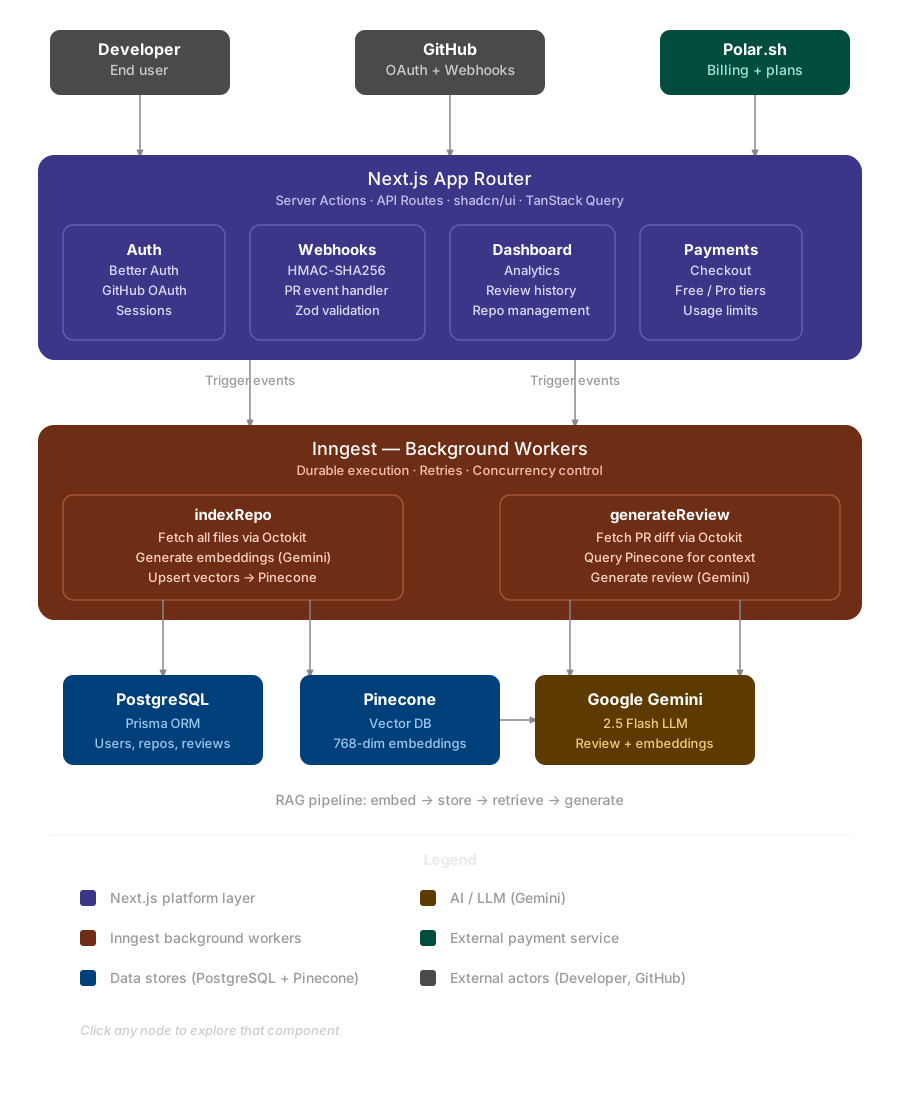
CodeRevU is designed around a fully event-driven, server-rendered Retrieval-Augmented Generation (RAG) architecture:
- •Next.js 16 App Router Platform: Coordinates client interactions, Server Actions, API routes, and real-time dashboard UI using shadcn/ui and TanStack Query.
- •Auth: Better Auth validates sessions and enables credential-less GitHub OAuth flow.
- •Webhooks: Secures incoming GitHub repository updates via HMAC-SHA256 signatures, routed to a dedicated PR event handler validated by Zod schemas.
- •Dashboard: Renders dynamic repo analytics, review histories, and active project settings.
- •Payments: Manages free/pro subscription tiers and limits using Polar.sh checkout and billing gates.
- •Inngest Background Workers: Drives reliable, durable asynchronous queue workflows with built-in retry mechanisms and fine-grained concurrency limiters.
- •indexRepo: Triggered on project registration to crawl repository files via Octokit, generate embeddings, and bulk upsert them into the vector store.
- •generateReview: Triggered on pull request updates to analyze diff files, pull context-aware matches from the vector database, and format structured code feedback.
- •Data Stores: PostgreSQL (interfaced via Prisma ORM) manages user configurations and repository states. Pinecone DB holds 768-dimensional vector embeddings for low-latency similarity queries.
- •AI/LLM Engine: Google Gemini 2.5 Flash acts as the core model for both compiling vector embeddings during ingestion and formulating targeted reviews under precise grounding prompts.
Key Challenges
- •Indexing large repositories without blocking GitHub webhook flows.
- •Designing a RAG pipeline that retrieves semantically relevant code instead of naive file matches.
- •Handling concurrent PR events safely across multiple repositories.
- •Preventing hallucinated feedback by grounding LLM responses in real code context.
Key Learnings
- •Pinecone-based vector search significantly improved contextual relevance over keyword-based approaches.
- •Asynchronous workflows with Inngest prevented API blocking and enabled safe concurrency.
- •Structured prompts reduced noisy or vague review output.
- •Webhook-driven architectures require idempotency and replay safety.
Uniqueness
- •PR-level RAG instead of generic repo chat.
- •Fully automated review generation on PR open/update.
- •Structured feedback designed for real engineering teams.
Impact
- •Eliminated repetitive manual review effort for common PR patterns.
- •Enabled faster review cycles with consistent feedback quality.